Not long ago, Anheuser-Busch InBev "top brass" presented its global marketing seminar in China. Beer Marketers Insights quoted an attendee's notes on the global brand-positioning efforts for three of ABI's worldwide mega-brands:
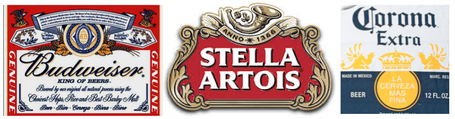
(Note: Outside the U.S., Corona is marketed by ABI.)
Sounds sort of reasonable, right? Targeting different brands... differently. So, what sort of "different need-states" that drive growth has A-B identified? They continued:
There is no record of how the financial analysts reacted. Chances are, they were satisfied that the world's largest brewer had so carefully differentiated its big brands. No one appears to have raised a key criticism: "Can simply invoking these need-states really differentiate beer brands?"
By themselves, need-states have no marketing value
The fact is, these need-states could apply to any beer. Arguably to every beer. None of them is at all distinctive. They simply don't "belong" to any one brand. Want proof?
By themselves, need-states have no marketing value
The fact is, these need-states could apply to any beer. Arguably to every beer. None of them is at all distinctive. They simply don't "belong" to any one brand. Want proof?
| Each of the three featured ABI brands can, and in fact already does, lay claim to a need-state supposedly assigned to one of the others. Budweiser just spent a fortune promoting "Bud + Burgers," when the "food and savor" need-state was assigned to Stella. Corona features the "relaxation and bonding" territory that Budweiser was to represent. While Stella Artois pretty much hits all three need-states in one commercial. "Owning" a need-state by way of simple assertion is film-flam. Maybe stock-market analysts unschooled in positioning will fall for it, but savvy marketers know better. | |
To lay claim to a need-state, a beer must offer a relevant difference
The entire purpose of marketing is to cause people to choose one brand over others. To accomplish this, a beer brand must highlight a distinctive difference in its product, one compelling enough to interest those other drinkers. A real difference in the beer's ingredients, its brewing processes, its taste profile, its source, its brewing recipe. Something real to offer beer drinkers a reason to believe, and a reason to switch.
Anheuser-Busch should already know this. After all, its hottest brand by far over the past few years focuses on the need-state surrounding physical fitness... linked to a beer that celebrates its low calories and carbohydrates.
The entire purpose of marketing is to cause people to choose one brand over others. To accomplish this, a beer brand must highlight a distinctive difference in its product, one compelling enough to interest those other drinkers. A real difference in the beer's ingredients, its brewing processes, its taste profile, its source, its brewing recipe. Something real to offer beer drinkers a reason to believe, and a reason to switch.
Anheuser-Busch should already know this. After all, its hottest brand by far over the past few years focuses on the need-state surrounding physical fitness... linked to a beer that celebrates its low calories and carbohydrates.
Now, that's a need-state effectively claimed by a brand focusing on its relevant point of distinctiveness.
Coming soon
Before long, Bud Light--the faltering AB brand desperately in need of a powerful positioning--will unveil advertising from its newest ad agency. Reviewers will ask themselves: Is it funny? Is it memorable? Does it feature beautiful locations? Fun parties? Are there celebrities? Cool music? Hipness?
But the most telling top-line critique of Bud Light's new work will lie in the answer to one far more important question...
Do the ads highlight a provocative difference in the beer?
The answer to that question will reveal what Anheuser-Busch really knows about positioning.
Pay attention, stock-market analysts. You might learn something.
Coming soon
Before long, Bud Light--the faltering AB brand desperately in need of a powerful positioning--will unveil advertising from its newest ad agency. Reviewers will ask themselves: Is it funny? Is it memorable? Does it feature beautiful locations? Fun parties? Are there celebrities? Cool music? Hipness?
But the most telling top-line critique of Bud Light's new work will lie in the answer to one far more important question...
Do the ads highlight a provocative difference in the beer?
The answer to that question will reveal what Anheuser-Busch really knows about positioning.
Pay attention, stock-market analysts. You might learn something.



 RSS Feed
